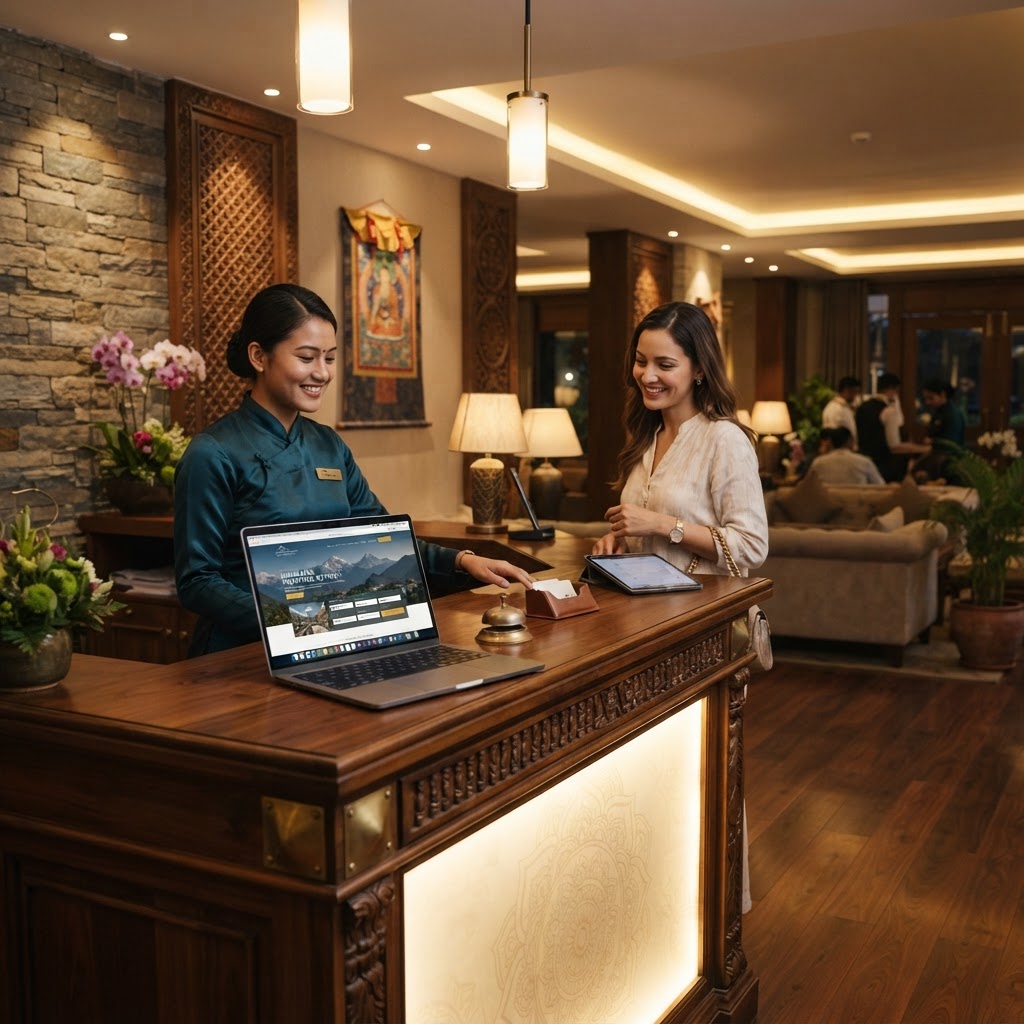
Website Development in Nepal: Complete Guide to Building a Professional Business Website in 2026
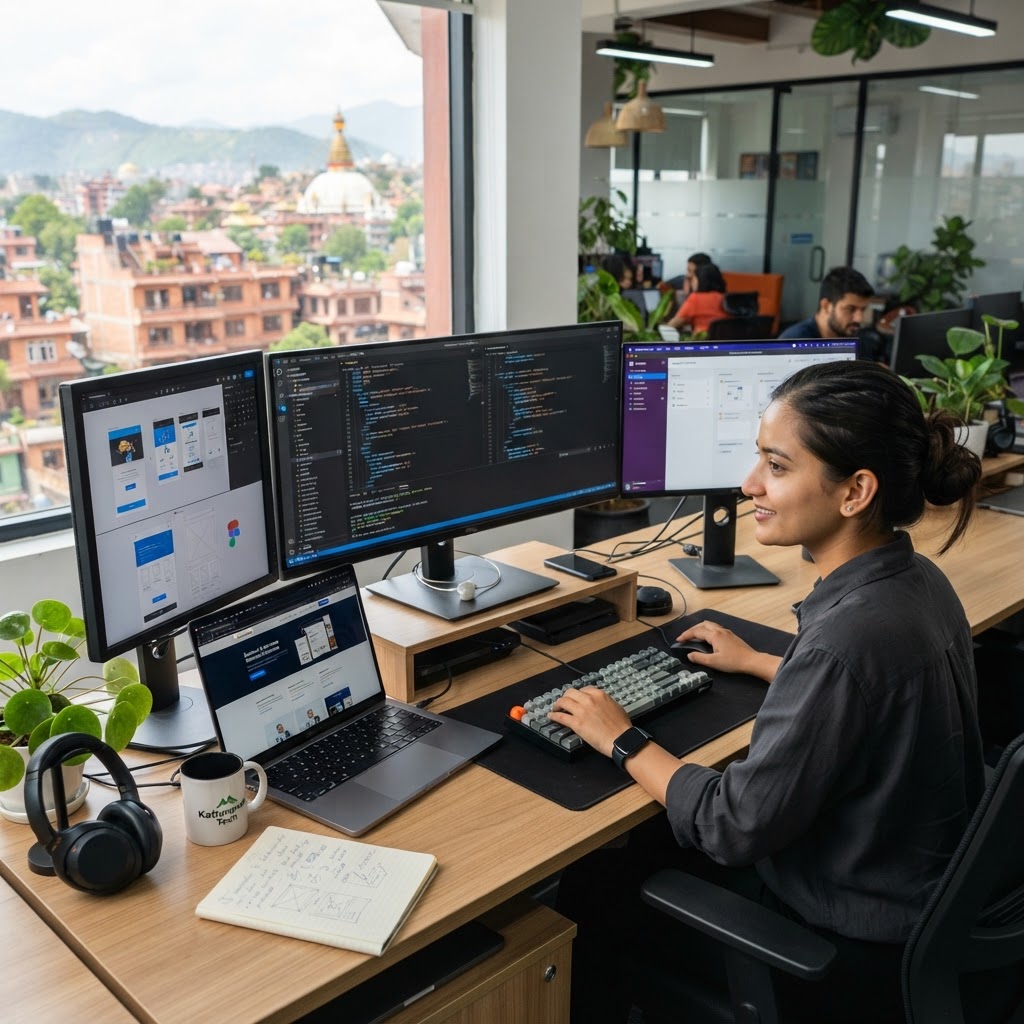
Website development in Nepal requires a professional approach tailored to local and international business needs.
If you run a business in Nepal — whether a hotel in Thamel, a trekking agency in Pokhara, a restaurant in Kathmandu, or a growing corporate brand — your website is often the first impression potential customers have of your business. In 2026, website development in Nepal is no longer a luxury; it is a fundamental business requirement.
This guide covers everything you need to know about website development in Nepal: what it involves, the types of websites Nepali businesses need, essential features, the development process, costs, and how to choose the right development partner.
What Is Website Development?
Website development refers to the complete process of building and maintaining a website. It encompasses everything from planning the site structure and designing the user interface to writing the code, integrating features, testing, deploying, and providing ongoing maintenance.
Website development includes both front-end development (what users see and interact with — the design, layout, buttons, forms, and animations) and back-end development (the server, database, and application logic that power the website behind the scenes).
In the context of Nepal, website development also means understanding the local market — how Nepali consumers browse the internet, what devices they use (mobile phones overwhelmingly), what payment methods are popular (eSewa, Khalti, IME Pay), and how to reach both domestic and international audiences.
Website Development vs Website Design
Many people use the terms "website design" and "website development" interchangeably, but they refer to different (though closely related) activities:
- Website design focuses on the visual and experiential aspects — how the site looks, how content is arranged, colour schemes, typography, imagery, and user flow. Designers use tools like Figma or Adobe XD to create mockups and wireframes.
- Website development is the technical implementation — turning those designs into a functional website using HTML, CSS, JavaScript, server-side languages, databases, and content management systems.
A successful website project requires both. A beautiful design that does not function properly is as ineffective as a well-coded website with a poor user experience.
Why Nepali Businesses Need Professional Websites
Nepal's digital landscape has changed significantly over the past few years. Internet penetration has grown rapidly, mobile data has become more affordable, and more Nepali consumers than ever are searching for products and services online.
Here is why a professional website matters for your business in Nepal:
1. Credibility and Trust
When a potential customer searches for your business name and finds nothing — or finds only a Facebook page — it sends a signal that your business may not be established or professional. A dedicated website with your own domain name (e.g., yourbusiness.com.np or yourbusiness.com) immediately builds credibility.
2. Discoverability Through Google Search
Social media posts disappear in feeds within hours. A well-optimised website can rank on Google for years, bringing you a steady stream of organic traffic. If someone in Kathmandu searches for "best hotel in Thamel" or "trekking agency Nepal," you want your business to appear.
3. Full Control Over Your Brand
On social media platforms, you do not own your audience. Algorithms change, reach decreases, and your content gets buried. Your website is the one digital asset you fully control — your content, your design, your data, your customer relationships.
4. Reaching International Customers
For tourism-related businesses in Nepal — hotels, trekking agencies, travel companies, restaurants — your website is how international visitors find you before they arrive in Nepal. A professional website is essential for attracting bookings from travellers in the USA, UK, Australia, Europe, and neighbouring countries.
Types of Websites for Nepali Businesses
Different businesses need different types of websites. Here are the most common categories relevant to the Nepali market:
Business and Corporate Websites
A business website serves as your digital storefront. It includes information about your company, the services or products you offer, your team, your contact details, and a way for potential customers to reach you. This is the most common type of website for Nepali businesses — from law firms in Kathmandu to manufacturing companies in Biratnagar.
Hotel Websites
Hotels, resorts, and guesthouses need websites that showcase rooms, amenities, and facilities, with enquiry and booking functionality. A hotel website should allow guests to view room types, check availability, make enquiries, and ultimately book directly. Learn more in our hotel website development guide.
Trekking and Travel Websites
Trekking agencies and travel companies need websites that present trek packages with detailed itineraries, difficulty levels, durations, pricing, departure dates, and enquiry systems. See our trekking website development guide for more details.
Restaurant and Cafe Websites
Restaurants need websites with digital menus, food photography, reservation systems, location maps, opening hours, and contact information. Read our restaurant website development guide for a complete walkthrough.
E-commerce Websites
If you sell products, an e-commerce website allows customers to browse, add to cart, and pay online. This is increasingly popular in Nepal with the growth of online shopping and digital payment platforms like eSewa, Khalti, and IME Pay.
Booking Websites
Booking websites allow customers to reserve services online — appointments, tours, rooms, tables, or event tickets. These are valuable for spas, salons, tour operators, event venues, and more.
Custom Web Applications
Some businesses need custom web applications — bespoke software built for a specific purpose, such as a school management system, a property listing portal, or a logistics tracking platform. These go beyond standard websites and involve full-stack development. Explore our custom software development services for more information.
Essential Website Features
Regardless of your business type, every professional website in Nepal should include these core features:
Mobile-First Design
The vast majority of internet users in Nepal access the web through mobile phones. Your website must be designed mobile-first — meaning it is built for small screens first and then enhanced for larger devices, not the other way around. A website that looks great on a desktop but is unusable on a phone will lose most of your visitors.
SEO-Friendly Architecture
Your website should be built with search engine optimisation in mind from the start. This includes clean URLs, proper heading structure (H1, H2, H3), meta tags, schema markup, fast load times, and crawlable content. Learn more about our SEO services in Nepal.
Fast Page Speed
Page speed is both a ranking factor on Google and a user experience factor. In Nepal, where mobile data speeds can vary, a fast website is especially important. Images should be optimised, code should be minified, and the site should be hosted on reliable servers.
Security (SSL)
Every website should have an SSL certificate (HTTPS). This encrypts data between the user's browser and your server, which is essential if you are collecting any form of customer information. Google also flags non-HTTPS sites as "Not Secure," which damages trust.
Content Management System (CMS)
A CMS allows you to update your website content — text, images, blog posts, packages — without needing to contact a developer every time. This is important for keeping your website fresh and relevant.
Contact Forms
A contact form is the most basic way for potential customers to reach you through your website. It should be simple, with just a few required fields, and should send enquiries to your email.
WhatsApp Integration
WhatsApp is widely used in Nepal and internationally. A WhatsApp chat button on your website allows visitors to message you instantly, which is particularly valuable for tourism businesses where international customers prefer WhatsApp for communication.
Google Maps Integration
Embedding a Google Map on your contact page helps customers find your physical location. This is especially important for restaurants, hotels, retail shops, and any business with a physical storefront.
Payment Integration
If you accept online payments, your website should integrate with a payment gateway. In Nepal, popular options include eSewa, Khalti, IME Pay, and international options like Stripe for foreign customers.
Booking Systems
For hotels, trekking agencies, restaurants, and service businesses, a booking system allows customers to reserve rooms, treks, tables, or appointments directly through your website.
The Website Development Process
A professional website development project follows a structured process. Here is what you should expect:
1. Planning and Discovery
The development team meets with you to understand your business, goals, target audience, competitors, and the features you need. This stage produces a project brief and sitemap.
2. UI/UX Design
Designers create wireframes and visual mockups of your website. This includes the homepage, inner pages, mobile layouts, and any special templates. You review and approve the designs before development begins.
3. Development
Developers turn the approved designs into a functional website. This involves front-end coding (HTML, CSS, JavaScript), back-end development (server, database), and CMS integration.
4. Content Creation
Content is written, images are prepared, and everything is loaded into the CMS. This includes page text, blog posts, product descriptions, menus, trek packages, or room descriptions.
5. SEO Optimisation
On-page SEO is applied — meta titles, descriptions, heading structure, image alt text, internal linking, schema markup, and sitemap submission to Google Search Console.
6. Testing
The website is tested across devices (mobile, tablet, desktop), browsers (Chrome, Safari, Firefox), and scenarios (forms, bookings, payments) to ensure everything works correctly.
7. Deployment
The website is moved from the development environment to the live server. Domain and hosting are configured, SSL is installed, and the site goes live.
8. Maintenance
After launch, the website needs ongoing maintenance — security updates, content updates, performance monitoring, and backups.
Website Development Cost in Nepal
The cost of website development in Nepal varies widely depending on the type of website, the features required, the complexity of the design, and the development team you choose.
For a detailed breakdown of pricing across different website types — from basic business websites to hotel, trekking, restaurant, and e-commerce websites — read our comprehensive website development cost guide for Nepal.
How to Choose a Website Development Company in Nepal
Choosing the right development partner is one of the most important decisions in your website project. Here are key factors to consider:
- Portfolio: Review their past work. Do they have experience building websites for businesses similar to yours?
- Technical expertise: Do they use modern technologies and best practices? Ask about their tech stack.
- SEO knowledge: A website that is not built for SEO will struggle to rank on Google. Ensure the team understands SEO-friendly development.
- Communication: Will you have a dedicated point of contact? How quickly do they respond?
- Support and maintenance: What happens after the website launches? Do they offer ongoing support?
- Pricing transparency: Are their prices clear? Are there hidden costs?
If you are looking for a website development company in Nepal, contact Global Orbit for a free consultation.
Common Mistakes to Avoid
- Choosing the cheapest option: A cheap website often costs more in the long run due to poor performance, security issues, and the need to rebuild.
- Ignoring mobile users: If your website is not mobile-friendly, you are losing the majority of your visitors.
- No SEO planning: Building a website without SEO in mind means it will not rank on Google and you will miss out on organic traffic.
- Too much content on one page: Long, cluttered pages overwhelm visitors. Keep content structured and scannable.
- Missing contact information: Make it easy for customers to reach you. Display your phone number, email, and address prominently.
- No maintenance plan: Websites need regular updates. Neglecting maintenance leads to security vulnerabilities and broken features.
Nepal-Specific Website Considerations
Building a website in Nepal comes with some unique considerations:
Local SEO
If your business serves a local area (e.g., a restaurant in Kathmandu, a hotel in Pokhara), local SEO is essential. This means optimising your Google Business Profile, using location-based keywords, and ensuring your business appears in local search results and Google Maps.
Google Business Profile
A Google Business Profile (formerly Google My Business) is free and essential. It allows your business to appear in Google Maps and local search results. Every business with a physical location should have one.
Google Search Console
Google Search Console is a free tool that lets you monitor how your website appears in Google search results. You can see which keywords bring traffic, submit your sitemap, and identify issues that may affect your rankings.
Technical SEO
Technical SEO includes site speed, mobile-friendliness, secure connections (HTTPS), structured data, and proper indexing. These are foundational elements that should be built into the website from the start, not added later.
Image SEO
Images should be optimised for both performance and search. This means compressing image files, using descriptive filenames, and adding alt text that describes the image for accessibility and SEO.
Payment Gateways
Nepal has its own payment ecosystem. If you are accepting online payments, consider integrating eSewa, Khalti, or IME Pay for domestic customers, and Stripe or PayPal for international customers.
Multilingual Considerations
Nepal has multiple languages. Depending on your audience, you may want to consider a website that supports both English and Nepali, or even additional languages if you serve international tourists.
Frequently Asked Questions
What is website development?
Website development is the process of building and maintaining a website. It includes planning, design, coding, content creation, SEO optimisation, testing, deployment, and ongoing maintenance. It covers both the visual front-end that users see and the technical back-end that powers the site.
How much does website development cost in Nepal?
The cost of website development in Nepal depends on the type of website, features, design complexity, and development team. Basic business websites start from lower price points, while complex e-commerce or custom web applications cost more. See our detailed cost guide for more information.
How long does it take to build a website in Nepal?
A basic business website typically takes 2–4 weeks. More complex websites like hotel booking systems, e-commerce platforms, or custom web applications can take 6–12 weeks or more, depending on the scope of the project.
What is the difference between web design and web development?
Web design focuses on the visual and experiential aspects — how the website looks and feels. Web development is the technical implementation — writing the code, building the database, and making the design function as a working website.
Do I need a website if I already have a Facebook page?
Yes. A Facebook page does not replace a website. Social media platforms control your reach and can change their algorithms at any time. A website gives you full ownership of your brand, content, and customer data, and it allows you to rank on Google for organic search traffic.
What should a business website in Nepal include?
A professional business website in Nepal should include a clear homepage, about page, services or products page, contact page with form and map, mobile-friendly design, SEO optimisation, SSL security, and fast loading times.
Can I update my website myself?
Yes, if your website is built with a content management system (CMS), you can update text, images, blog posts, and other content yourself without needing to contact a developer for every change.
Conclusion
Website development in Nepal has evolved from a nice-to-have to a business necessity. Whether you run a hotel in Kathmandu, a trekking agency in Pokhara, a restaurant in Lalitpur, or a growing corporate business, a professional website is your foundation for online success.
By understanding the types of websites available, the essential features, the development process, and how to choose the right partner, you can make an informed decision about your website project. Focus on mobile-first design, SEO, security, and user experience, and you will be well-positioned for online growth.
Ready to build your website? Contact Global Orbit for a free consultation, or explore our website development services in Nepal.
Frequently Asked Questions
What is website development?
Website development is the process of building and maintaining a website. It includes planning, design, coding, content creation, SEO optimisation, testing, deployment, and ongoing maintenance.
How much does website development cost in Nepal?
The cost of website development in Nepal depends on the type of website, features, design complexity, and development team. Basic business websites start from lower price points, while complex e-commerce or custom web applications cost more.
How long does it take to build a website in Nepal?
A basic business website typically takes 2-4 weeks. More complex websites like hotel booking systems, e-commerce platforms, or custom web applications can take 6-12 weeks or more.
What is the difference between web design and web development?
Web design focuses on the visual and experiential aspects of a website. Web development is the technical implementation — writing the code, building the database, and making the design function as a working website.
Do I need a website if I already have a Facebook page?
Yes. A Facebook page does not replace a website. A website gives you full ownership of your brand, content, and customer data, and allows you to rank on Google for organic search traffic.
What should a business website in Nepal include?
A professional business website in Nepal should include a clear homepage, about page, services or products page, contact page with form and map, mobile-friendly design, SEO optimisation, SSL security, and fast loading times.