Restaurant Website Development in Nepal: Complete Guide to Building a Modern Restaurant Website
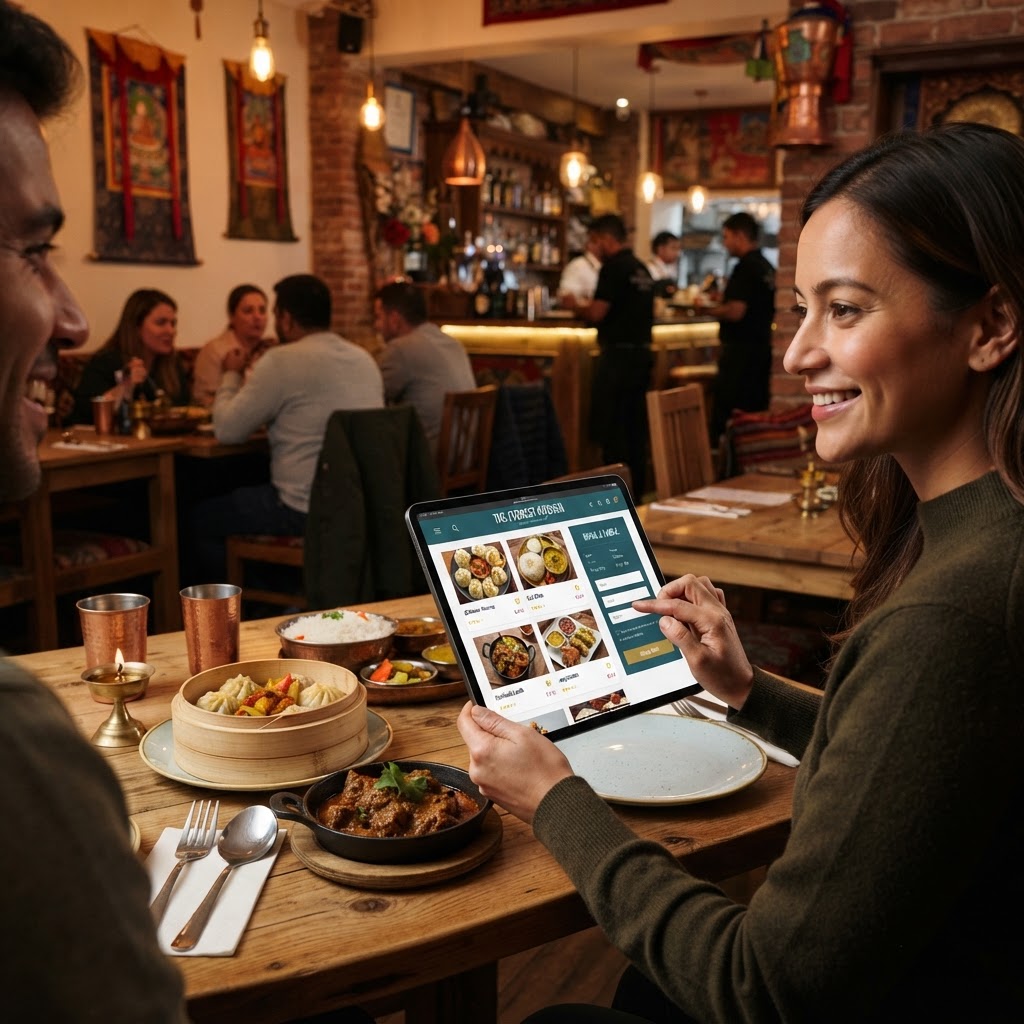
A professional restaurant website with a digital menu and reservation system is essential for food businesses in Nepal.
For restaurants, cafes, and food businesses across Nepal — from fine dining establishments in Kathmandu to cozy cafes in Pokhara — a professional website is one of the most effective tools for attracting new customers and building your brand. This guide covers everything you need to know about restaurant website development in Nepal.
Many restaurant owners in Nepal rely on social media alone. But a dedicated website gives you credibility, discoverability through Google, and full control over how your restaurant is presented.
Why Restaurants Need Websites
When someone in Kathmandu searches for "best restaurant near me" or "Italian restaurant in Thamel," the results that appear are influenced by your online presence. Here is why your restaurant needs a website:
- Discoverability: A website allows your restaurant to appear in Google search results, bringing in customers who are actively looking for a place to eat.
- Credibility: A professional website signals that your restaurant is established and trustworthy. Customers often check a restaurant's website before visiting.
- Menu accessibility: Customers want to see your menu before they visit. A digital menu on your website is always available and easy to update.
- Reservations: A website allows customers to book tables directly, without relying on third-party platforms.
- Brand control: Your website is where you control how your restaurant is presented — design, photography, tone, and content.
Website vs Social Media
Many restaurant owners in Nepal ask: "I already have an Instagram page with thousands of followers. Do I really need a website?"
The answer is yes. Social media and a website serve different purposes:
- Social media is great for daily engagement, sharing photos, and building a following. But your content is controlled by the platform's algorithm, and your reach can decrease at any time.
- A website gives you a permanent, searchable presence on Google. It is the first place potential customers go to find your menu, location, hours, and contact information.
The best strategy is to use both: drive social media followers to your website, and use your website to capture Google search traffic.
Digital Menu
Your digital menu is the most important content on your restaurant website. It should include:
- Food categories: Starters, main courses, desserts, drinks, etc.
- Item names and descriptions: Clear, appetising descriptions of each dish.
- Prices: Clearly displayed, including currency (NPR).
- Food photography: Professional photos of popular dishes. Good food photography significantly increases orders and visits.
- Dietary information: Vegetarian, vegan, gluten-free, spicy indicators.
- Special items: Chef's specials, seasonal items, or signature dishes highlighted.
Your menu should be easy to update through a CMS, so you can change prices, add new items, or remove unavailable dishes without contacting a developer.
Reservations and Table Booking
If your restaurant accepts reservations, your website should include a booking system. Options range from simple to sophisticated:
Reservation Form
A simple form where customers enter their name, phone number, date, time, and party size. You receive the request and confirm manually.
Online Booking System
A more advanced system that shows real-time table availability and allows customers to book instantly. This requires integration with a table management system.
WhatsApp Booking
A WhatsApp button allows customers to message you directly to make a reservation. This is simple, personal, and widely used in Nepal.
Location and Contact
Your restaurant website should make it extremely easy for customers to find you:
- Google Maps embed: Show your restaurant's location on a map.
- Address: Full street address, including landmarks.
- Opening hours: Clear, up-to-date opening and closing times.
- Phone number: Click-to-call for mobile users.
- WhatsApp: For quick questions and reservations.
- Parking information: If relevant, mention parking availability.
Additional Restaurant Website Features
Food Photography Gallery
A gallery of your best dishes, restaurant interior, and ambiance. Food photography is one of the most powerful marketing tools for restaurants.
Events and Offers
Promote special events — live music, festival celebrations, seasonal menus, or happy hour — on your website.
Reviews and Testimonials
Display customer reviews on your website. Link to your Google reviews and TripAdvisor page. Social proof is a major factor in restaurant choice.
About Us
Tell the story of your restaurant — your chef, your cuisine, your philosophy. This builds a personal connection with customers.
Blog
A restaurant blog can cover food stories, recipes, behind-the-scenes content, and local food culture. This improves SEO and keeps your website fresh. For more on website strategy, see our website development in Nepal guide.
Restaurant SEO and Local SEO
SEO is critical for restaurants because customers search for nearby places to eat on Google.
Local SEO
Claim and optimise your Google Business Profile. This is the single most important SEO step for a restaurant. Your Google Business Profile appears in Google Maps and local search results, and includes your menu, photos, reviews, hours, and location.
Restaurant Structured Data
Implement Restaurant schema markup on your website. This tells Google that your site is about a restaurant and includes information like cuisine type, price range, hours, and menu URL.
Menu SEO
Make your menu text-based (not just images). Search engines cannot read text inside images. A text-based menu allows Google to index your dishes, which can help you appear in searches for specific cuisines or dishes.
Image SEO
Optimise food photos with descriptive filenames and alt text. "chicken-momo-kathmandu-restaurant.jpg" is better than "IMG_5678.jpg."
Mobile-First Menu Experience
Most customers will view your restaurant website on their phone — often while walking or looking for a place to eat nearby. Your website must be mobile-first:
- Menu readable without zooming
- Phone number clickable to call
- Map embedded and interactive
- Reservation form easy to fill on mobile
- Fast loading — hungry customers are impatient
Restaurant Website CMS
A CMS is essential for restaurant websites because menus change frequently. You need to be able to:
- Update prices
- Add and remove dishes
- Change opening hours (especially during festivals like Dashain and Tihar)
- Post events and offers
- Update photos
Restaurant Website Development Process
- Discovery: Understanding your restaurant, cuisine, target customers, and competitive landscape.
- Design: Creating visual mockups of the homepage, menu page, and reservation flow.
- Development: Building the website with a CMS, reservation form, and map integration.
- Content: Writing menu descriptions, loading food photos, and adding restaurant information.
- SEO: Implementing meta tags, restaurant schema, and submitting to Google Search Console.
- Testing: Testing the menu display, reservation form, and mobile experience.
- Launch: Deploying the website and connecting the domain.
- Maintenance: Updating menu items, prices, and seasonal information.
Restaurant Website Cost in Nepal
The cost of a restaurant website depends on the features required — a simple website with a digital menu and contact information costs less than a website with online reservations and event management. For a detailed cost breakdown, see our website development cost guide for Nepal.
Choosing a Restaurant Website Developer
When choosing a developer for your restaurant website, consider:
- Experience building restaurant or food websites
- Understanding of local SEO and restaurant schema
- Ability to deliver a mobile-first design
- CMS for easy menu updates
- Ongoing support and maintenance
Explore our restaurant website development services or contact Global Orbit for a free consultation.
Common Mistakes to Avoid
- Menu as image only: If your menu is only available as an image, Google cannot read it, and it is hard to view on mobile. Use text-based menus.
- No photos: Restaurants without food photos miss a major conversion opportunity. Invest in professional food photography.
- Outdated information: Old prices, wrong opening hours, or removed dishes create a poor customer experience.
- No mobile optimisation: If your website is hard to read on a phone, customers will go to a competitor.
- No SEO: Without SEO, your restaurant will not appear in Google search results.
- Hidden contact information: Make your phone number, address, and hours prominent and easy to find.
Frequently Asked Questions
Do restaurants need their own website?
Yes. A website gives your restaurant credibility, allows customers to view your menu, find your location, make reservations, and discover you through Google search. Social media alone does not provide these benefits.
What should a restaurant website include?
A restaurant website should include a digital menu with prices and photos, location map, opening hours, contact information, reservation system, customer reviews, food photography gallery, and a mobile-friendly design.
How much does a restaurant website cost in Nepal?
The cost depends on features. A simple website with a menu and contact information costs less than a website with online reservations. See our cost guide for details.
Should my menu be text or image?
Your menu should be text-based, not image-only. Search engines cannot read text inside images, and text menus are easier to view on mobile devices. You can use images of individual dishes alongside text descriptions.
How long does it take to build a restaurant website?
A restaurant website typically takes 2–4 weeks, depending on the number of menu items, photography requirements, and reservation system complexity.
Do I need a CMS for my restaurant website?
Yes. A CMS allows you to update menu items, prices, opening hours, and events without contacting a developer. This is essential for restaurants that change their menu seasonally.
What is restaurant schema markup?
Restaurant schema is structured data that tells Google your website is about a restaurant, including cuisine type, price range, hours, and menu URL. It can improve how your restaurant appears in search results.
Conclusion
A professional restaurant website is an essential marketing tool for any food business in Nepal. It gives you credibility, discoverability through Google, and a platform to showcase your menu, photos, and brand. By focusing on a text-based digital menu, mobile-first design, local SEO, and professional food photography, you can build a website that attracts more customers and grows your business.
Ready to build your restaurant website? Contact Global Orbit for a free consultation, or explore our restaurant website development services.
Frequently Asked Questions
Do restaurants need their own website?
Yes. A website gives your restaurant credibility, allows customers to view your menu, find your location, make reservations, and discover you through Google search.
What should a restaurant website include?
A restaurant website should include a digital menu with prices and photos, location map, opening hours, contact information, reservation system, customer reviews, and a mobile-friendly design.
How much does a restaurant website cost in Nepal?
The cost depends on features. A simple website with a menu and contact information costs less than a website with online reservations.
Should my menu be text or image?
Your menu should be text-based, not image-only. Search engines cannot read text inside images, and text menus are easier to view on mobile devices.
How long does it take to build a restaurant website?
A restaurant website typically takes 2-4 weeks, depending on the number of menu items, photography requirements, and reservation system complexity.
Do I need a CMS for my restaurant website?
Yes. A CMS allows you to update menu items, prices, opening hours, and events without contacting a developer.
What is restaurant schema markup?
Restaurant schema is structured data that tells Google your website is about a restaurant, including cuisine type, price range, hours, and menu URL.