Trekking Website Development in Nepal: Complete Guide for Trekking & Travel Companies
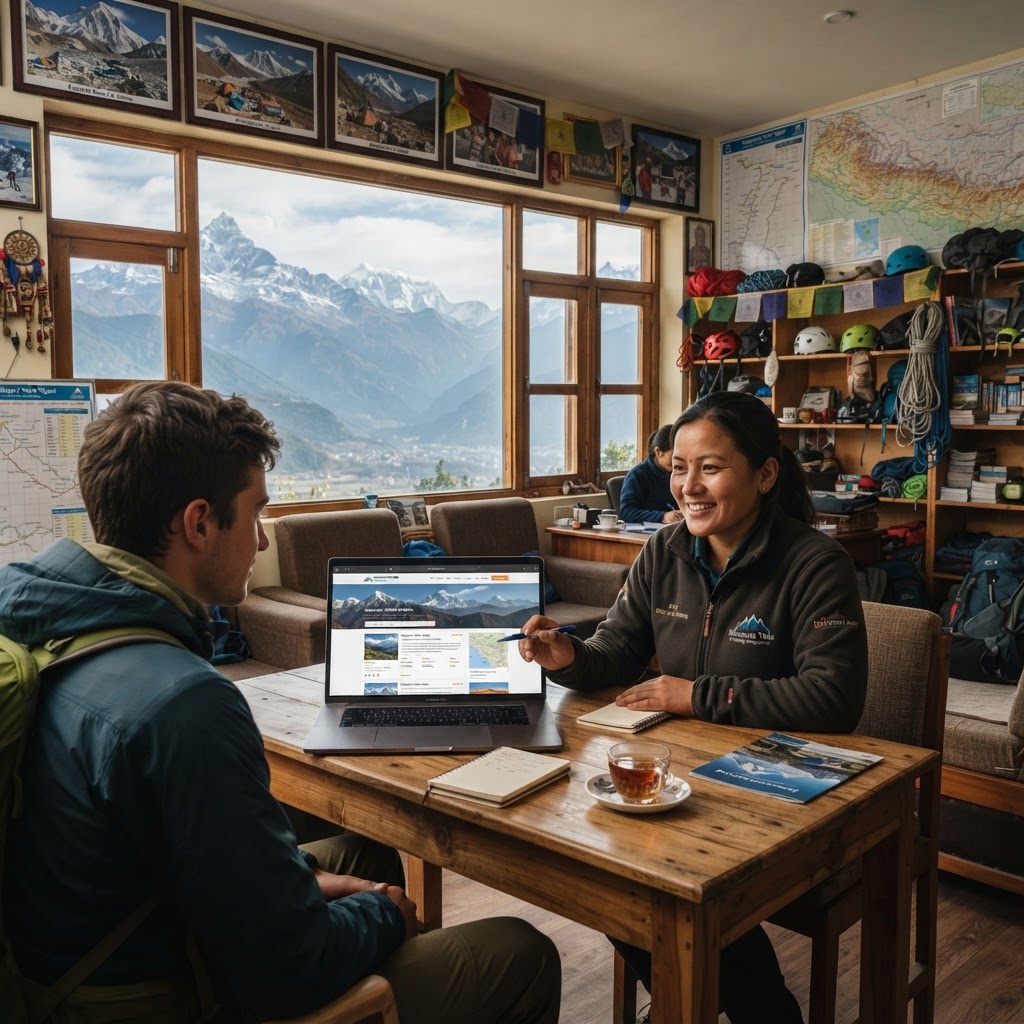
A professional trekking website is essential for attracting international trekkers to Nepal.
Nepal is one of the world's premier trekking destinations. From the iconic trails of Everest Base Camp to the stunning Annapurna Circuit, trekkers from around the globe come to experience the Himalayas. For trekking agencies and tour operators in Nepal, a professional website is the primary way to attract international trekkers, showcase packages, and manage enquiries. This guide covers everything you need to know about trekking website development in Nepal.
Whether you are a small trekking agency in Kathmandu or an established adventure travel company in Pokhara, your website is your most important marketing tool.
Why Trekking Companies Need Professional Websites
The trekking industry in Nepal is highly competitive. There are hundreds of trekking agencies, and international trekkers almost always research online before choosing an operator. Here is why your website matters:
- International reach: Trekkers from the USA, UK, Australia, Germany, France, and other countries search for trekking information online. Your website is how they find you.
- Credibility: A professional website with detailed trek information, clear pricing, and transparent policies builds trust with international trekkers who may be sending significant money to a company in Nepal.
- Direct enquiries: A website allows trekkers to contact you directly, rather than through third-party platforms that charge commission.
- Showcase expertise: Your website is where you demonstrate your knowledge of trekking routes, safety practices, and Nepal's mountains.
Trek Package Pages
Each trek package should have its own comprehensive page. This is the core of your trekking website. Each package page should include:
- Trek name: E.g., "Everest Base Camp Trek," "Annapurna Circuit Trek," "Manaslu Circuit Trek."
- Overview: A compelling introduction to the trek.
- Difficulty level: Easy, moderate, challenging, or strenuous.
- Duration: Number of days.
- Maximum altitude: The highest point on the trek.
- Best season: Spring (March–May) and autumn (September–November) are the main trekking seasons in Nepal.
- Permits required: TIMS card, Sagarmatha National Park permit, Annapurna Conservation Area permit, Manaslu restricted area permit, etc.
- Price: Clearly displayed pricing, ideally with options for group and private departures.
- What's included: Accommodation, meals, guide, porter, transportation, permits.
- What's not included: International flights, travel insurance, personal expenses, tips.
- Itinerary: Day-by-day breakdown of the trek.
- Map: A visual map of the trekking route.
- Gallery: Photos from the trek.
- FAQs: Common questions about the trek.
- Departure dates: Available group departure dates.
- Enquiry/book button: A clear call-to-action.
Trek Itinerary Pages
The itinerary is one of the most important elements of a trek package page. Trekkers want to know exactly what each day involves. A good itinerary includes:
- Day number and destination
- Walking duration and distance
- Altitude gain and loss
- Accommodation type (teahouse, lodge, camping)
- Meals included
- Highlights of the day
For example, an Everest Base Camp trek itinerary would show 12–14 days, starting with a flight to Lukla, trekking through Namche Bazaar, Tengboche, Dingboche, Lobuche, Gorak Shep, and finally reaching Everest Base Camp.
Destination Pages
Beyond individual trek packages, creating destination pages for popular trekking regions in Nepal can boost your SEO significantly. These pages provide general information about the region and link to specific trek packages:
Everest Region (Khumbu)
The Everest region is Nepal's most famous trekking area. Home to Mount Everest, the world's highest peak, it attracts trekkers from around the globe. Popular treks include Everest Base Camp Trek, Gokyo Lakes Trek, and Three Passes Trek.
Annapurna Region
The Annapurna region offers diverse landscapes, from subtropical valleys to high mountain passes. Popular treks include Annapurna Circuit, Annapurna Base Camp, and Ghorepani Poon Hill Trek.
Manaslu Region
The Manaslu Circuit is a restricted area trek offering a less crowded alternative to Annapurna. It requires a special permit and a licensed guide.
Langtang Region
Langtang Valley Trek is a shorter, accessible trek north of Kathmandu, offering beautiful scenery and Tamang cultural experiences.
These destinations are mentioned as examples. Your website should feature the treks you actually offer.
Booking Enquiries and Availability
Your trekking website should make it easy for trekkers to enquire about or book a trek:
Enquiry Form
An enquiry form allows trekkers to select a trek, choose dates, specify group size, and ask questions. You receive the enquiry and respond with a detailed proposal.
WhatsApp Integration
International trekkers frequently use WhatsApp. A WhatsApp button on your website allows them to message you directly with questions, which is often faster and more personal than email.
Departure Dates
Displaying group departure dates on your website allows trekkers to join existing groups, which is a common booking option for solo travellers and small groups.
Trekking Website CMS
A content management system is essential for trekking websites because you need to frequently update trek packages, departure dates, pricing, and seasonal information. A CMS allows you to:
- Add new trek packages
- Update pricing and departure dates
- Post trekking blog articles
- Manage enquiries
- Update photos and itineraries
Trekking SEO and Destination SEO
SEO is particularly important for trekking websites because international trekkers search extensively online before choosing an operator.
Keyword Strategy
Target keywords that trekkers actually search for: "Everest Base Camp trek," "Annapurna Circuit trek," "trekking in Nepal," "best trekking company Nepal." Use these naturally in your page titles, headings, and content.
Destination SEO
Create content around trekking destinations and routes. This attracts trekkers who are in the research phase and helps establish your authority. For broader context, see our website development in Nepal guide.
Local SEO
Claim your Google Business Profile and ensure your trekking agency appears in local search results for "trekking agency Kathmandu" or "trekking company Pokhara."
Image SEO
Trekking websites are image-heavy. Optimise all photos with descriptive filenames and alt text. Mountain photography is a powerful marketing tool — make sure it is also SEO-friendly.
Google Search Console
Submit your sitemap to Google Search Console and monitor which keywords bring traffic. This free tool is essential for understanding how trekkers find your website.
International Visitor Experience
Your trekking website will be visited by people from around the world. Consider:
- Clear English: Your content should be in clear, professional English that international trekkers can easily understand.
- Currency: Consider displaying prices in both NPR and USD, or offering a currency converter.
- Trust signals: Display your licence number, guide certifications, and any affiliations with trekking associations (TAAN, NMA).
- Safety information: International trekkers care about safety. Include information about altitude sickness prevention, emergency evacuation, and insurance requirements.
- Fast loading: International visitors may have varying internet speeds. Ensure your website loads quickly.
Trekking Website Development Process
Building a trekking website follows these stages:
- Discovery: Understanding your trekking agency, the treks you offer, your target market, and competitive landscape.
- Design: Creating visual mockups of the homepage, trek package pages, and enquiry flow.
- Development: Building the website with a CMS, enquiry system, and WhatsApp integration.
- Content: Writing trek descriptions, itineraries, and loading photos.
- SEO: Implementing meta tags, schema markup, and submitting to Google Search Console.
- Testing: Testing enquiry forms, mobile experience, and page speed.
- Launch: Deploying the website and connecting the domain.
- Maintenance: Ongoing updates to trek packages, dates, and pricing.
Trekking Website Cost in Nepal
The cost of a trekking website depends on the number of trek packages, the complexity of the enquiry system, and the content requirements. For a detailed cost breakdown, see our website development cost guide for Nepal.
Choosing a Trekking Website Development Company
When choosing a developer for your trekking website, consider:
- Experience building trekking or tourism websites
- Understanding of the international trekking market
- SEO knowledge, including destination SEO
- Ability to deliver a mobile-first design
- Ongoing support and maintenance
Explore our trekking website development services or contact Global Orbit for a free consultation.
Common Mistakes to Avoid
- Missing itinerary details: Trekkers want day-by-day details. Vague descriptions will send them to a competitor.
- No clear pricing: Hidden or unclear pricing erodes trust. Be transparent about what is and is not included.
- Poor quality photos: Trekking is a visual experience. Invest in professional mountain photography.
- No mobile optimisation: Many trekkers research on their phones. A non-mobile-friendly website loses visitors.
- No SEO: If your trekking website does not rank on Google, international trekkers will not find you.
- Slow response to enquiries: International trekkers often contact multiple agencies. Fast responses win bookings.
Frequently Asked Questions
Why does my trekking agency need a website?
International trekkers research online before choosing an operator. A professional website allows you to showcase your trek packages, build credibility, and receive direct enquiries from trekkers around the world.
What should a trekking website include?
A trekking website should include detailed trek package pages with itineraries, pricing, difficulty levels, permits, departure dates, a gallery, an enquiry form, WhatsApp integration, and a blog about trekking in Nepal.
How much does a trekking website cost in Nepal?
The cost depends on the number of trek packages, the enquiry system, and content requirements. See our cost guide for details.
How long does it take to build a trekking website?
A trekking website typically takes 3–6 weeks, depending on the number of trek packages and the content requirements.
Can trekkers book directly through my website?
Yes. Your website can include an enquiry form that allows trekkers to select a trek, choose dates, and specify group size. You can also display group departure dates for trekkers to join.
Do I need a CMS for my trekking website?
Yes. A CMS allows you to update trek packages, departure dates, pricing, and blog content without contacting a developer. This is essential for trekking agencies that update seasonal information frequently.
How can I attract international trekkers to my website?
Focus on SEO with trek-specific keywords, create detailed destination content, use professional mountain photography, integrate WhatsApp for easy communication, and ensure your website loads quickly for international visitors.
Conclusion
A professional trekking website is the foundation of your digital marketing strategy. It is how international trekkers find you, evaluate your services, and ultimately book a trek. By focusing on detailed package pages, transparent pricing, mobile-first design, and SEO, you can build a website that consistently generates enquiries and bookings.
Ready to build your trekking website? Contact Global Orbit for a free consultation, or explore our trekking website development services.
Frequently Asked Questions
Why does my trekking agency need a website?
International trekkers research online before choosing an operator. A professional website allows you to showcase your trek packages, build credibility, and receive direct enquiries from trekkers around the world.
What should a trekking website include?
A trekking website should include detailed trek package pages with itineraries, pricing, difficulty levels, permits, departure dates, a gallery, an enquiry form, WhatsApp integration, and a blog about trekking in Nepal.
How much does a trekking website cost in Nepal?
The cost depends on the number of trek packages, the enquiry system, and content requirements.
How long does it take to build a trekking website?
A trekking website typically takes 3-6 weeks, depending on the number of trek packages and the content requirements.
Can trekkers book directly through my website?
Yes. Your website can include an enquiry form that allows trekkers to select a trek, choose dates, and specify group size.
Do I need a CMS for my trekking website?
Yes. A CMS allows you to update trek packages, departure dates, pricing, and blog content without contacting a developer.
How can I attract international trekkers to my website?
Focus on SEO with trek-specific keywords, create detailed destination content, use professional mountain photography, integrate WhatsApp, and ensure your website loads quickly.